


+86-13971665988 | info@justcaredisposable.com


Views: 0 Author: Site Editor Publish Time: 2026-04-12 Origin: Site


Transitioning away from restrictive medical gowns is long overdue. Bulky traditional clothing and unhygienic reusable cloth garments create unnecessary frustration. Patients and caregivers deserve better solutions. Purpose-built, individually packaged disposable shorts offer a clear upgrade. They bridge the massive gap between commercial medical settings and high-need family scenarios. Whether you manage outpatient physical therapy or handle post-op home care, proper attire matters. Standard garments often fail vulnerable users during maternity recovery or travel. Selecting the right Disposable Underwear requires careful evaluation. You must assess material integrity, opacity, and sterility classifications. These factors ensure patient dignity. They achieve this without sacrificing clinical or practical accessibility. In this guide, you will learn how to decode material specifications. We will explore the critical differences between sterile and non-sterile options. Finally, you will discover an actionable framework to select the best disposable shorts for any care environment.
Material Matters: High-grade SMS (Spunbond Meltblown Spunbond) multi-layer fabrics offer superior fluid resistance and breathability compared to standard paper alternatives.
Dignity Drives Compliance: Dark-colored, multi-phasic materials prevent "light cast" (see-through issues), directly improving user comfort and cooperation.
Infection Control: Sterile, individual packaging mitigates cross-contamination risks, serving as a baseline requirement for clinical and high-risk home care environments.
Inclusive Sizing Scales: True utility requires a vendor capable of supplying true-to-size fits ranging from youth to extended bariatric (up to 10XL) sizes.
Traditional one-piece patient gowns present major obstacles in modern healthcare. They severely restrict lower-body mobility. This restriction complicates physical therapy. It creates physical barriers during routine medical examinations. Furthermore, open-back garments frequently cause severe exposure anxiety. Patients feel highly vulnerable in these outfits. This anxiety directly reduces their willingness to participate in active recovery exercises. When individuals feel exposed, their overall compliance drops significantly.
For home care or travel, traditional reusable clothing poses completely separate risks. Washing standard Underwear during active infections introduces heavy cross-contamination risks. Post-surgery recovery often involves wound fluids, ointments, and drainage. Managing these hazardous fluids increases labor overhead for family caregivers. Simply put, standard home washing machines cannot guarantee medical-grade hygiene. They fail to reach the temperatures required to destroy certain clinical pathogens.
Historically, solving this hygiene problem involved a frustrating trade-off. Early-generation disposable garments sacrificed structural opacity for improved breathability. They offered a desirable "breezy feel" but failed to maintain basic modesty. Patients felt intensely embarrassed wearing them. The fabric was too sheer under harsh clinic lighting. High-quality disposable exam shorts now solve this exact dilemma. They provide full visual coverage while maintaining excellent airflow for extended wear.
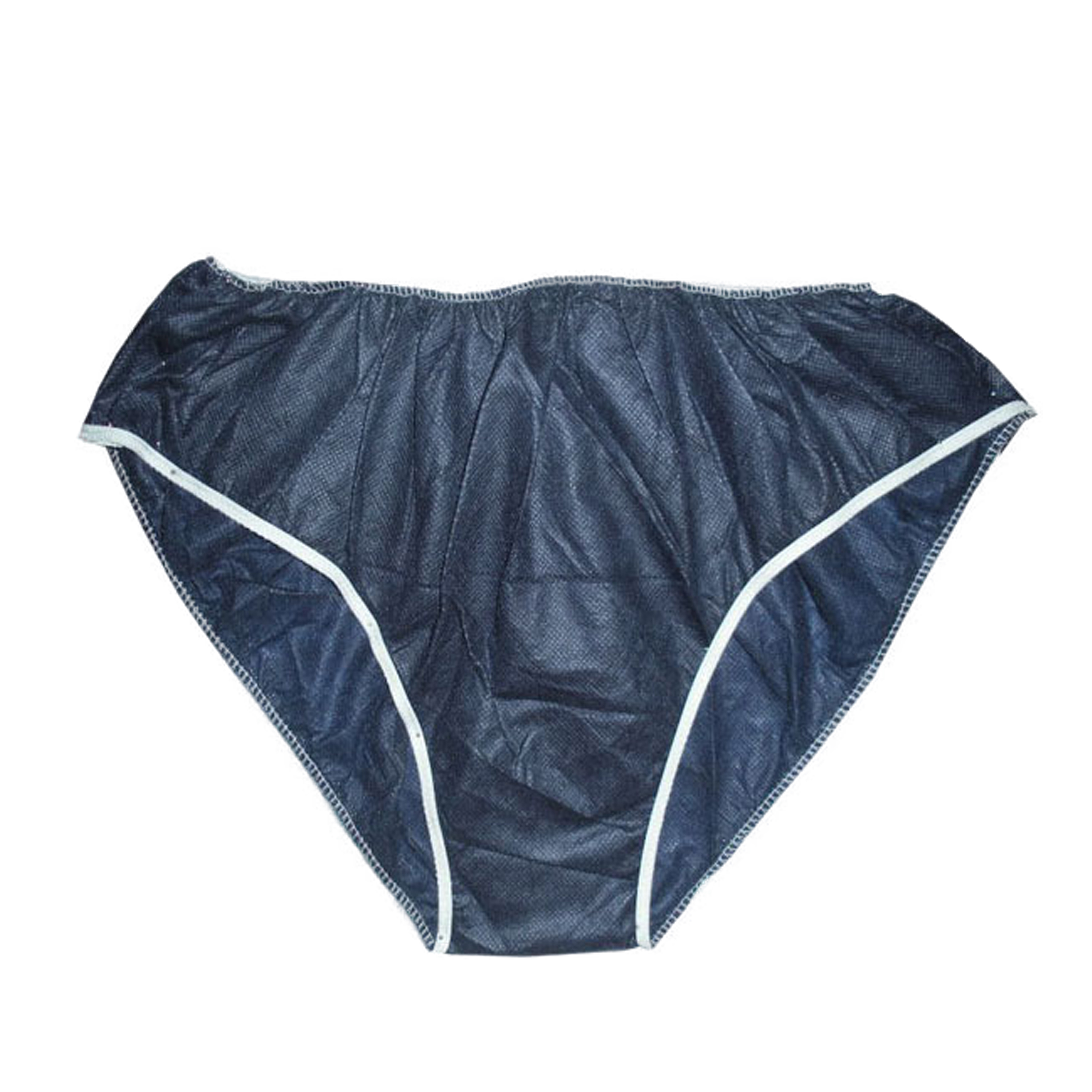
Not all disposable garments deliver the same level of performance. You must understand the underlying fabric technology. Basic spunbond polypropylene offers lightweight, standard coverage. It works adequately for quick, low-risk screening scenarios. However, SMS (Spunbond Meltblown Spunbond) non-woven multi-layer material provides vastly superior protection. SMS delivers high fluid resistance and excellent bacterial filtration. We must evaluate these materials across several core dimensions to ensure safety.
First, consider the crucial dimension of opacity. Top-tier disposable exam shorts utilize heavy, dark pigments. Deep navy blue or solid black colors serve as industry standards. Manufacturers use multi-phasic fabric construction to block light transmission completely. This prevents embarrassing see-through moments under bright surgical or examination lights. Patients remain confident and relaxed.
Next, you must examine tensile strength carefully. Tear-resistant fabrics remain absolutely essential for active use. Patients need to bend, stretch, and walk safely during therapy. They often pull these garments aggressively over non-slip hospital grip socks. The fabric must withstand this active physical movement without catastrophic failure. Paper-based alternatives rip instantly under these conditions.
Finally, strict hypoallergenic requirements remain non-negotiable. Ensure your selected product features 100% latex-free elastic waistbands. Latex exposure frequently causes severe contact dermatitis in sensitive patient populations. Hypoallergenic certification protects both the facility and the patient from unexpected allergic reactions.
Material Feature | Basic Polypropylene | SMS Multi-Layer |
|---|---|---|
Fluid Resistance | Low (Absorbs quickly) | High (Medical Grade barrier) |
Opacity | Moderate (Can be sheer) | High (Completely blocks light) |
Durability | Prone to ripping | High tensile strength |
Breathability | Excellent | Excellent (Micro-porous) |
Choosing between sterile and non-sterile options dictates your infection control success. You must align your purchase criteria directly with the intended daily application. Misunderstanding these compliance tiers leads to dangerous hygiene failures or wasted budgets.
Sterile individual packaging is strictly mandated for all high-risk clinical zones. This includes surgical environments, intensive burn units, and invasive outpatient procedures. It is equally crucial for immunocompromised family care at home. Each piece undergoes sterilization and is sealed independently. This guarantees an uncontaminated baseline before the package opens. It provides absolute peace of mind for vulnerable patients.
Conversely, non-sterile bulk packaging serves very different operational needs. It is perfectly acceptable for general physical therapy clinics. You can use it safely for routine exams, spa massage services, and general family travel. These items remain hygienically manufactured in cleanrooms. However, they lack the strict sterilization certifications required for open wounds.
You must use a proper evaluation framework. Match the strictness of your infection control protocols to your specific use case. This logical approach prevents over-purchasing expensive medical-grade sterility where it isn't required. Simultaneously, it ensures you never under-spec equipment for highly vulnerable users.
Use Case Scenario | Recommended Format | Primary Benefit |
|---|---|---|
Post-Op & Burn Units | Sterile, Individual | Zero baseline bacteria risk |
Immunocompromised Care | Sterile, Individual | Maximum home safety |
General Physical Therapy | Non-Sterile, Bulk | Cost-effective daily access |
Spa & Massage Services | Non-Sterile, Bulk | Convenient modesty coverage |
Transitioning to single-use shorts dramatically impacts your overall operational efficiency. The Total Cost of Ownership (TCO) drivers reveal massive financial and logistical benefits. These advantages apply equally to large commercial facilities and individual family homes.
Commercial Facility Savings: Hospitals and clinics see a dramatic reduction in commercial laundry contracts. They reduce expensive water and electricity utility costs immediately. Facilities also extend the physical lifespan of their primary gowns, utilizing them strictly as upper-body covers.
Family and Home Care: Caregivers permanently eliminate ruined personal garments. Heavy post-op drainage or unexpected incontinence leaks destroy standard woven fabrics. Single-use items save significant replacement costs over a long recovery period.
Inventory Management: Standardized disposable stocks drastically reduce daily sorting and folding labor. Nursing staff can reallocate this saved time directly toward patient care.
Beyond direct financial costs, consider the vital "Time-to-Care" metric. The easy-access design of these shorts empowers medical professionals. Caregivers can perform lower-body evaluations swiftly and safely. They do not require the patient to disrobe fully. This efficiency increases daily clinical throughput across the entire ward. It also significantly reduces patient fatigue during lengthy, exhausting exam days.
Implementing new care garments always introduces distinct operational risks. Facility managers and families must navigate these adoption hurdles carefully. The most common and damaging pitfall is the sizing trap. Standardizing exclusively on "one-size-fits-most" SKUs is highly dangerous. It frequently fails bariatric patients entirely. Overly tight waistbands cause severe circulation issues and immediate physical discomfort.
Adoption friction presents another major challenge during rollout. Patients or family members will refuse to wear the garment if it feels unpleasant. Scratchy, rough materials ruin the care experience instantly. Overly crinkly fabrics create loud, audible friction during regular movement. This noise draws unwanted attention and makes the environment feel excessively clinical.
To ensure total success, apply this critical rollout lesson. You must audit your supplier’s size matrix thoroughly before purchasing. Maintaining equity in patient care and dignity is non-negotiable.
Best Practice: Ensure SKU availability ranging from Youth Small up to extended bariatric (8XL-10XL) sizes.
Common Mistake: Ignoring elastic tension limits. Excessively tight bands cause painful skin indentations.
Risk Mitigation: Test sample materials for noise reduction. Patients heavily prefer silent, soft, fabric-like textures.
Selecting the right manufacturing vendor secures long-term compliance and user comfort. You should use a strict, objective checklist for all procurement and purchase decisions. Do not rely on marketing claims alone.
First, demand official material certification documents. Confirm they use genuine SMS or an equivalent non-woven poly construction. Second, strictly verify their packaging proofs. Inspect the independent sealing mechanisms for sterile SKUs. Compare this against their bulk sleeve packaging quality. Third, execute thorough review verification. Check end-user feedback meticulously on independent platforms. Specifically, look for user comments targeting leg room, waistband roll-down, and visual opacity.
Your immediate next-step action is simple and practical. Request physical sample packs before committing to large wholesale orders. Test the physical tear strength actively in your own facility. Pull the fabric aggressively against standard hospital grip socks. Assess the ultimate stretch limit of the latex-free elastic. Only authorize bulk-family or facility purchases after these real-world physical audits succeed. Premium products will easily pass these intense stress tests.
Transitioning to high-quality, individually packaged disposable shorts resolves a major healthcare friction point. It perfectly balances necessary clinical access with unwavering patient dignity. Decision-makers must act strategically to maximize these benefits.
Prioritize latex-free, multi-layer SMS options to future-proof your medical supply closets.
Ensure your selected sizing matrix strictly covers everyone, from youth to bariatric patients.
Select sterile packaging for invasive procedures and opt for non-sterile for general daily care.
Request physical samples to actively audit tear strength and opacity before bulk ordering.
Advise your procurement teams to implement these exact standards immediately. This proactive approach guarantees both family readiness and strict facility compliance.
A: High-quality multi-phasic or SMS disposable shorts in dark colors (black or dark blue) are specifically engineered to prevent light cast. This specialized construction blocks light transmission entirely, ensuring full modesty even under harsh surgical lamps.
A: Yes. Facilities should select generously sized variants for this exact purpose. Many suppliers offer sizes ranging up to 10XL. These feature highly elastic waistbands specifically designed to accommodate bulky secondary care garments comfortably.
A: Sterile options are individually sealed and treated to eliminate all microorganisms. They are required for surgical and post-op use. Non-sterile options are hygienically manufactured but intended for general exams, physical therapy, or personal travel.
A: Standard paper alternatives may tear easily. However, premium spunbond polypropylene and SMS materials are designed to allow free bending and stretching. They interact safely with other garments, like non-slip socks, without ripping.
A: Buyers must verify the product spec sheet carefully. However, industry-standard clinical disposable shorts strictly utilize 100% latex-free elastic. This ensures full compliance with medical allergy protocols and prevents contact dermatitis.
