


+86-13971665988 | info@justcaredisposable.com


Views: 0 Author: Site Editor Publish Time: 2026-04-12 Origin: Site


Finding the right incontinence solution often feels like a frustrating guessing game. In fact, industry data suggests buyers try up to seven different products before finding a reliable match. This trial-and-error process causes immense stress for families and healthcare providers alike. You must view success beyond simply catching leaks. A truly effective management routine actively maintains delicate skin integrity. It significantly reduces caregiver fatigue. It also optimizes your daily spending by eliminating wasted supplies.
This guide provides a technical, evidence-based evaluation framework. You will learn to bypass confusing marketing fluff and vague packaging claims. We will help you select high-quality Disposable Underwear based on real physical needs and proven material science. Read on to discover how sizing, mobility, and core absorbency metrics dictate your best options.
Absorbency marketing labels (like "maximum" or "heavy") are arbitrary; buyers must evaluate the Acquisition Distribution Layer (ADL) and Super Absorbent Polymer (SAP) capacity.
Mobility and manual dexterity—not just leak volume—should dictate the choice between pull-on and tabbed styles.
Sizing up causes leaks; fit must be calculated using the "larger of two" rule (waist vs. hip).
Premium disposable underwear lowers Total Cost of Ownership (TCO) by requiring fewer daily changes and reducing associated skin-care costs.
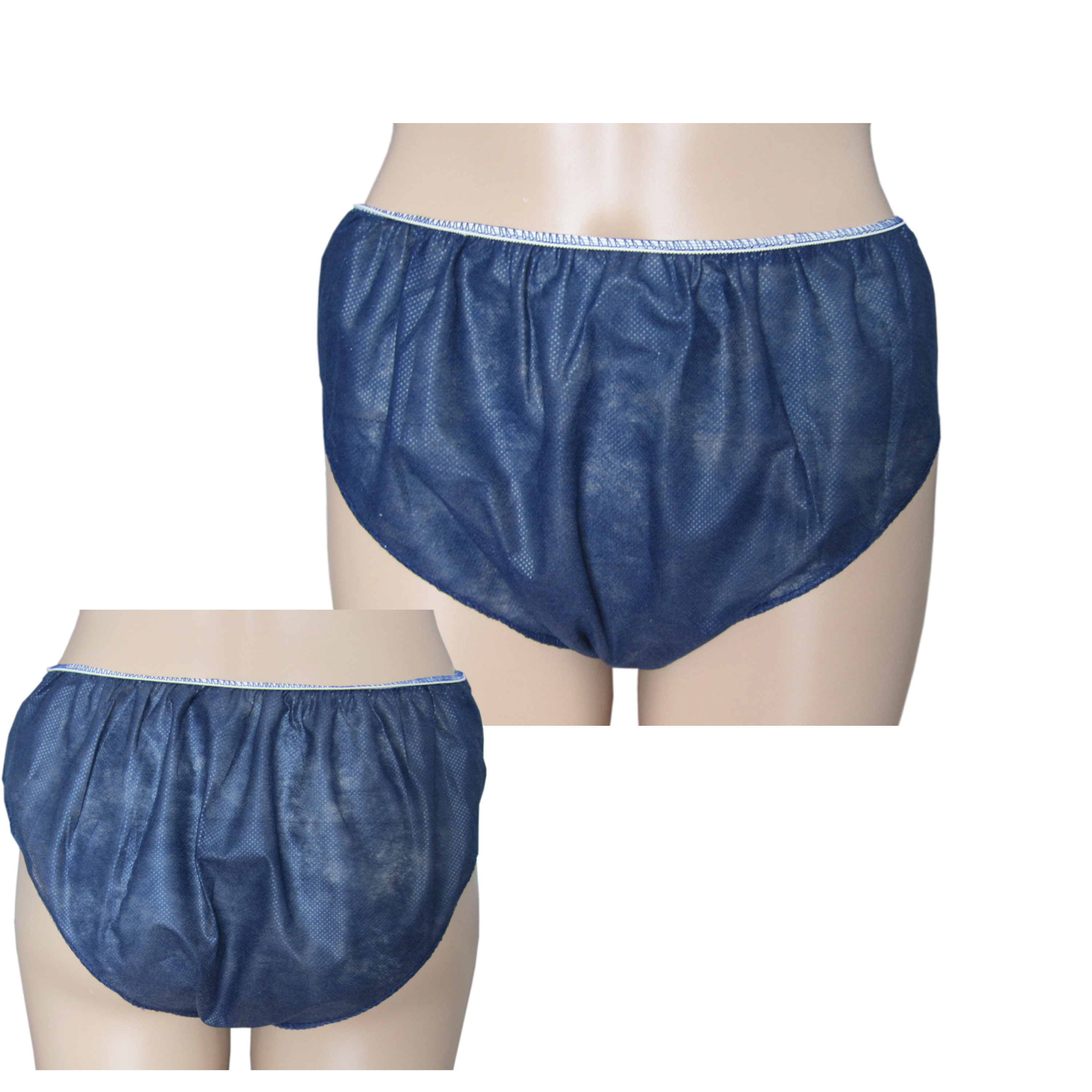
Many brands use subjective terms like "maximum protection" on their packaging. These labels mean very little. You need to look inside the product to evaluate its true performance.
The Acquisition Distribution Layer (ADL) serves as the first line of defense. It rapidly pulls moisture away from the top sheet. It distributes this fluid evenly across the entire core. This process prevents uncomfortable pooling. Beneath the ADL lies the absorbent core itself.
Cheap products rely heavily on traditional fluff pulp. Fluff pulp feels soft but acts exactly like a basic sponge. When squeezed, it releases liquid back onto the skin. High-quality Disposable Underwear uses Super Absorbent Polymers (SAP). These tiny advanced beads absorb up to 300 times their weight in liquid. They transform urine into a secure, dry gel. SAP also actively neutralizes pH levels. This chemical reaction prevents harsh ammonia odors and protects sensitive skin from irritation.
Total volume matters, but speed matters just as much. The Rate of Acquisition (ROA) measures how fast the core absorbs liquid. High ROA prevents sudden, heavy voids from running off the sides. It remains critical for users experiencing large surges of urine.
You must also evaluate the Rewet Rate. This metric measures how much liquid resurfaces under physical pressure. When you sit or lie down, your body weight presses directly against the core. A low rewet rate means the surface stays completely dry. This directly equals drier skin and fewer dangerous bedsores.
Shortlisting Logic: Ignore simple "droplet" icons on packaging.
Verify Capacity: Look for exact liquid capacity measured in ounces or cups.
Check Specs: Prioritize brands publishing their ROA and SAP ratios.
Your physical mobility directly dictates your ideal product architecture. Do not select styles based on leak volume alone.
Pull-on styles closely mimic regular everyday underwear. They work best for highly active users. If you can transition from sitting to standing independently, choose this style. Pull-ons allow you to toilet normally. They promote dignity and maintain standard bathroom routines.
When evaluating these products, always inspect the side seams. You must look for tear-away sides. This feature allows for quick, hygienic removal. You simply rip the seams to take the garment off. You avoid pulling a soiled product down your legs.
Pull-ons do not work for everyone. Tape-tab designs, often called adult briefs, wrap securely around the body. They remain mandatory for individuals facing limited mobility. Caregivers rely heavily on these specific styles. They allow for complete product changes while the user lies safely in bed.
Do not buy products utilizing cheap adhesive tape. High-quality options feature re-fastenable micro-hook tabs. These function much like Velcro. They allow caregivers to adjust the fit multiple times. You can easily check for wetness without destroying the fastener.
You must also factor in mental and physical agility. Cognitive decline changes your product requirements entirely. Users experiencing dementia often exhibit a tendency to undo side tabs. This behavior leads to accidental removals and messy leaks. Standard pull-on styles work best here. They completely hide the removal mechanism from plain sight.
Furthermore, consider daily manual dexterity. Arthritis severely limits hand strength. If you suffer from joint pain, manipulating tiny adhesive strips becomes incredibly painful. Large micro-hook tabs or simple pull-on designs offer the easiest handling.
Sizing mistakes cause most product failures. Many people wrongly assume larger sizes hold more liquid. In reality, sizing up guarantees disastrous leaks.
You must measure accurately to ensure proper protection. Follow this exact formula:
Take a flexible tape measure.
Measure the exact waist circumference at the belly button.
Measure the circumference of the widest part of the hips.
Write both numbers down carefully.
Always apply the "larger of two" rule. Compare your largest measurement against the manufacturer's specific sizing chart. This single step eliminates hours of frustrating trial and error.
A proper fit specifically secures the leg gussets. These elasticized openings serve as your primary leak guards. They must sit snugly against the inner thigh. If you buy a size too large, you create distinct gaps at the leg hole. Gravity pulls liquid straight through these gaps.
When gaps form, the highly engineered absorbent core becomes entirely useless. Fluid escapes before the SAP can even absorb it. A snug fit remains non-negotiable for effective leak protection.
The outer layer of the product directly dictates skin health and discretion. You generally face two main material choices.
Modern cloth-like backsheets use 100% breathable non-woven fabrics. They allow vapor to escape freely. This action reduces dangerous heat buildup against the skin. It effectively prevents maceration and rashes. Cloth-like materials also operate silently. They do not crinkle when you walk, ensuring complete discretion. They represent the gold standard for everyday high-quality Disposable Underwear.
Conversely, poly-backed materials use a plastic-like film. They are completely waterproof. However, they trap intense heat. Manufacturers primarily use poly-backing in heavy-duty, clinical tabbed briefs. Choose this material only when severe leakage risks heavily outweigh the need for discretion and breathability.
Stop looking at the basic price per unit. You must calculate the Total Cost of Ownership (TCO) to understand your true monthly spend.
Mass-market brands line supermarket shelves everywhere. They boast incredibly low upfront prices. However, they contain very low SAP volume. You will likely need six to eight changes every single day.
Premium clinical brands cost more upfront. Yet, their advanced cores reduce changes to just three or four per day. This dramatic reduction cuts your laundry costs. It lowers your barrier cream usage. It also prevents exhausting nighttime disruptions. Over a month, premium products often cost significantly less overall.
Performance Metric | Mass-Market Brands | Premium Clinical Brands |
|---|---|---|
Daily Changes Required | 6 to 8 changes | 3 to 4 changes |
SAP Content | Very low (relies on fluff pulp) | High (maximum fluid retention) |
Nighttime Sleep Impact | Frequent leaks and disruptions | Uninterrupted, dry sleep |
Skin Health Risk | High risk of maceration/rashes | Excellent moisture and pH control |
You can optimize your budget further using a smart layering architecture. Consider the booster pad strategy. A booster pad acts as an absorbent insert. Crucially, it features a specialized flow-through design.
You place it inside your standard Disposable Underwear. The pad absorbs the initial void. Once full, liquid passes straight through it into the main garment's core. This strategy allows you to scale absorbency up dynamically. You do not have to buy thicker, expensive base products for occasional heavy days.
Avoid these common pitfalls to ensure maximum comfort and reliable protection.
Caregivers often layer two pairs of protective underwear together. They hope the outer layer catches leaks escaping from the inner layer. This represents a massive fallacy. The inner pair features a waterproof backing. This barrier completely prevents any fluid transfer. Urine hits the plastic backsheet and runs straight out the leg holes. Double diapering simply wastes money and guarantees immediate leaks.
Do not use menstrual pads for urinary incontinence. These products handle entirely different bodily fluids. Menstrual blood possesses a high viscosity. It flows slowly. Period pads rely on materials designed for slow absorption. Urine features very low viscosity. It releases rapidly in high volumes. If you expose a period pad to a sudden urinary void, the liquid simply runs off the surface.
Never assume clothing sizes translate to incontinence products. Sizing lacks any true industry standardization. A "Large" from a drugstore brand might easily equal a "Medium" in a premium clinical line. Buying based on subjective size labels ruins your fit. You must always rely on exact centimeter or inch measurements.
Finding the perfect protection requires technical strategy, not guesswork. Successful incontinence management relies heavily on balancing technical specifications with physical realities. You must match core features like SAP capacity and ROA against your specific mobility levels. Never forget that a proper, snug fit dictates ultimate performance.
We strongly advise you to measure your waist and hips today. Use the larger number to shortlist two or three premium brands. Finally, never buy bulk cases immediately. Always contact manufacturers to request sample packs first. Test the fit and absorption at home to ensure total confidence in your final choice.
A: You should establish a strict changing protocol to preserve skin integrity. For active users, change the product every four to six hours, even if it is not fully saturated. If the user soils the garment with a bowel movement, you must change it immediately. Leaving feces against the skin causes rapid breakdown and severe infections.
A: No. Standard products contain highly active Super Absorbent Polymers (SAP). The SAP will immediately absorb pool water until the core bursts and creates a massive mess. For water activities, you must use specialized, non-absorbent swim diapers designed exclusively for solid bowel containment.
A: Gender-specific designs often provide better return on investment for heavy, localized voids. Men's products feature extra padding concentrated in the front panel. Women's options focus the absorbent core in the bottom-center. Matching the product to your anatomy ensures fluid hits the thickest part of the core immediately.
