


+86-13971665988 | info@justcaredisposable.com


Views: 0 Author: Site Editor Publish Time: 2026-09-24 Origin: Site


The neck strip acts as the first physical touchpoint of a professional grooming service. While often ignored, this minor detail heavily impacts client comfort and the overall shop experience. Substandard neck strips carry real operational costs. Clients frequently endure a tight, scratchy collar in silence. They wonder if the barrier is even necessary, especially when it fails and leaves itchy hair clippings sliding down their shirt. Not all products in this category are manufactured equally. A technical evaluation of material science, elasticity, adhesive properties, and proper application techniques easily distinguishes high-performance options from low-tier alternatives. Understanding these structural differences guides purchasing managers and shop owners toward data-backed inventory decisions. Upgrading this single touchpoint eliminates daily workflow frustrations, ensures regulatory compliance, and improves the standard of care provided in the chair.
Material Engineering Dictates Performance: The balance between stretchability and softness relies on high-grade cellulose fiber construction, which prevents premature tearing while maintaining flexibility.
Tension Control is a Dual Responsibility: Comfort requires both a structurally sound disposable salon neck protector and proper barber application technique. Fitting tension often has a greater effect on comfort than material softness alone.
Adhesive Integrity is Non-Negotiable: A strip's stretch capacity is useless if the adhesive patch fails under tension; evaluating glue quality is as critical as evaluating the paper.
Hidden Costs of Cheap Supplies: Low-quality strips lead to higher waste (double-stripping, tearing) and negative client experiences, negating any upfront cost savings.
Standard strips routinely fail at the worst possible moments. The primary failure point occurs when the paper snaps under pressure during application. Alternatively, low-grade strips fail to stretch enough to accommodate varying neck sizes. This forces barbers to use multiple pieces, slowing down the service. Understanding why this happens requires looking closely at how these products are manufactured. We see this daily on the shop floor. A barber pulls the strip, and it tears right down the middle, disrupting the rhythm of the haircut.
The foundation of any high-quality strip lies in its raw materials. Rigid, low-grade paper pulp lacks the necessary structural integrity for salon environments. Standard paper snaps instantly when pulled. It cannot conform to the complex curves of the human neck. Highly refined cellulose fibers provide a completely different structural profile. Cellulose offers natural flexibility while retaining impressive tear resistance.
Manufacturers utilize specific crepe-paper production techniques to enhance this flexibility. During manufacturing, the cellulose material undergoes a mechanical creping process. This introduces thousands of microscopic folds across the surface of the paper. These micro-folds act like tiny accordions. When a barber pulls the ends of the strip, these folds flatten out. This allows the material to expand uniformly without rupturing the underlying fiber network. The density of these micro-folds directly determines the maximum stretch capacity of the final product.
Material Type | Elasticity Profile | Tear Resistance | Shop Floor Performance |
|---|---|---|---|
Standard Paper Pulp | Very Low (Under 10% stretch) | Poor. Snaps under minimal tension. | Requires double-stripping for larger clients. High waste. |
Blended Recycled Paper | Moderate (10-20% stretch) | Average. Tears if pulled off-center. | Inconsistent. Often feels scratchy against the skin. |
High-Grade Cellulose | High (30-40%+ stretch) | Excellent. Withstands firm, even pulling. | Conforms perfectly to the neck. Zero double-stripping needed. |
Professional use demands a highly specific stretch-to-tear ratio. A strip must expand significantly to wrap around a client. It must also stop stretching before the material becomes too thin. If the paper thins out too much, it loses its ability to block hair splinters. The ideal tensile strength ensures the strip holds its shape tightly against the skin without snapping under the kinetic load of the barber's pull. When a strip lacks elasticity, it does not sit flush. The clipper teeth can catch the loose paper during a skin fade, pulling it and startling the client.
Environmental factors in a barbershop constantly challenge this tensile strength. Moisture poses the greatest threat to paper products. Sweat, continuous water sprays, and steam from hot towels during wet shaves rapidly degrade standard paper pulp. High-performance Barber Neck Strips utilize moisture-resistant cellulose blends. These blends maintain their structural integrity and elasticity limits even when damp. A standard grooming service lasts 30 to 45 minutes. The strip must endure this entire duration without disintegrating, losing its adhesive grip, or sagging away from the client's skin.
Creating a reliable barrier against hair clippings requires a tight, structural seal. However, maintaining client comfort requires softness and breathability. Balancing these two opposing requirements defines professional draping. Success depends entirely on the physical properties of the strip and the physical technique of the operator.
Client demographics vary wildly. A shop services young children with very narrow necks and adult clients with much wider profiles, such as athletes or bodybuilders. High-elasticity strips comfortably fit this entire spectrum without requiring barbers to tape two strips together. The material must expand smoothly to wrap around a wider neck while retaining enough rebound elasticity to stay flush against a narrower neck.
The "maximum stretch" error remains a common issue on the shop floor. Many professionals instinctively pull the strip to its absolute maximum capacity before securing it. This ruins the structural softness of the crepe paper. Fully flattened micro-folds turn the soft cellulose back into a rigid, sharp edge. This creates an immediate choking sensation for the client. The material acts like a tourniquet. It must secure the cape while retaining a portion of its original elasticity to move naturally as the client breathes, swallows, and turns their head.
A strip's stretch capacity becomes entirely useless if the adhesive patch fails. The self-adhesive blue or green patches on the ends of the strip carry the entire kinetic load of the wrapped paper. These patches require highly specialized chemical formulations. They must grip instantly upon contact and hold firm against the continuous outward pull of the stretched cellulose.
Furthermore, this adhesive must survive a harsh chemical environment. Skin oils naturally break down standard glues. Shaving creams, heavy talc powders, and liquid sanitizers frequently contact the neck area. If a barber applies talc with a neck duster and it hits a cheap adhesive patch, the glue immediately neutralizes and the strip pops open. Professional-grade adhesives resist these common shop substances. They maintain a locked seal under tension. This ensures the barrier remains intact from the initial clipper work through the final straight razor lineup.
Product quality only goes so far without proper execution. Correct application methods bridge the gap between premium materials and daily shop workflows. Proper draping prevents client discomfort and eliminates the need for mid-service adjustments.
Follow this step-by-step process for optimal application:
Extract the strip cleanly from the dispenser to avoid tearing the edges. Pull straight out, not at an angle.
Pre-stretch the strip slightly before wrapping it around the client to activate the micro-folds and soften the material.
Wrap the strip evenly, ensuring it sits flat against the skin without twisting or bunching.
Secure the adhesive patches together at the front or side of the neck. Press firmly for two seconds to lock the glue.
Drape the cutting cape over the client, securing the cape collar just below the adhesive patch.
Fold the top edge of the paper collar down over the cape's neckline to lock the seal and create a physical gutter for falling hair.
Draping Issue | Root Cause | Corrective Action |
|---|---|---|
Strip pops open mid-service | Adhesive contaminated by skin oils or talc, or poor glue quality. | Ensure neck is dry before application. Press adhesive patches firmly together. |
Client complains of tightness | Barber pulled the strip to its maximum stretch capacity. | Pre-stretch slightly, then wrap gently. Leave some elasticity in the paper. |
Hair falls down the shirt | Failure to fold the paper over the cape collar. | Always fold the top half of the strip down over the cape to create a catch gutter. |
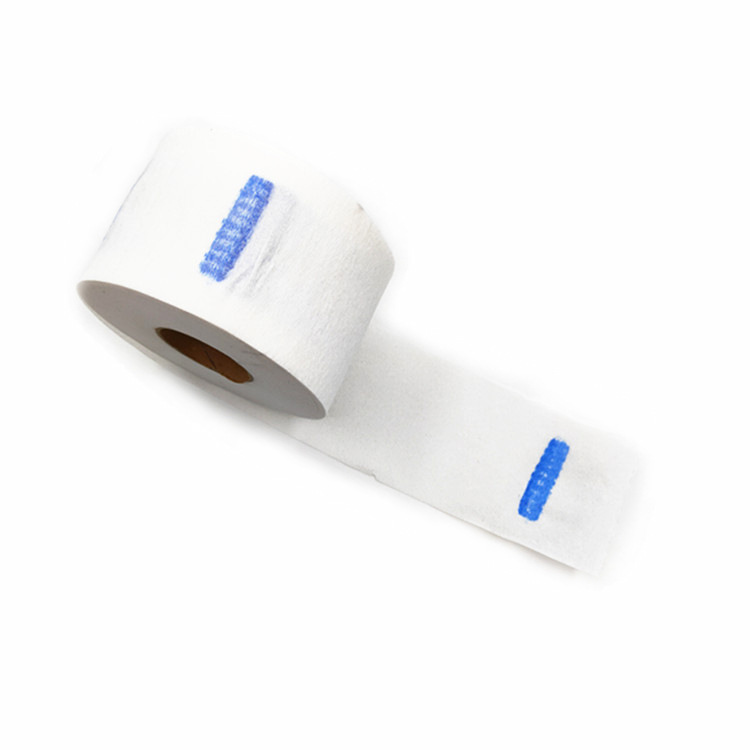
Committing to bulk orders requires a clear evaluation framework. Salon owners and purchasing managers must assess different brands objectively. Relying solely on the lowest price per roll often leads to operational nightmares on the cutting floor. You need supplies that perform consistently across hundreds of haircuts a week.
Understanding how specific manufacturing features translate into daily shop outcomes helps clarify purchasing decisions. Use the following matrix to evaluate potential suppliers before signing a bulk contract.
Material Feature | Technical Function | Operational Outcome |
|---|---|---|
High Stretchability | Allows uniform expansion via crepe micro-folds. | Faster application, fewer torn strips, and a customized fit for all clients. |
Cellulose Softness | Provides a non-abrasive texture against the skin. | Eliminates skin micro-abrasions and delivers a higher perceived luxury experience. |
Moisture Resistance | Maintains tensile strength when exposed to liquids. | Exceptional durability during wet shaves, chemical services, and continuous spray-downs. |
Premium Adhesion | Locks the stretched paper without degrading. | Secures the cape drape perfectly, resulting in zero hair slippage down the shirt. |
State cosmetology boards enforce strict regulations regarding cross-contamination. A primary mandate requires that reusable cutting capes never touch a client's bare skin. Neck strips serve as the frontline defense in regulatory compliance. They provide a mandatory, single-use sanitary barrier between the client and the shared cape. State inspectors look specifically at this cape-to-skin contact during surprise visits. Failing to maintain this barrier results in substantial fines and a hit to the shop's reputation.
Selecting the right disposable salon neck protector ensures this compliance while protecting client health. Professional environments demand non-toxic, hypoallergenic materials. Low-tier paper products sometimes retain harsh chemical residues from the bleaching process. These residues easily trigger contact dermatitis, especially when combined with friction and sweat. High-grade cellulose guarantees a safe, hypoallergenic barrier that protects the shop from liability and the client from irritation.
Even when shops invest in quality products, real-world operational challenges persist. Barbers move quickly. High-volume environments breed rushed techniques. Identifying and mitigating these workflow failures ensures the product performs as intended.
Few things ruin a premium haircut faster than itchy hair clippings trapped under a client's shirt. This major complaint stems from three specific failures during the draping process. First, over-stretching the strip thins the barrier, allowing sharp hair splinters to pierce the paper. Second, poor cape placement leaves gaps between the fabric and the paper seal. Third, adhesive failure causes the strip to pop open mid-service, dumping accumulated hair directly down the collar.
Mitigating this phenomenon requires strict attention to tensioning techniques. Barbers must select strips with higher rebound elasticity. This elasticity allows the paper to maintain a flush seal against the skin even as the client constantly moves their head to check the mirror or look down at their phone. Folding the paper securely over the cape collar creates an impenetrable physical gutter. This gutter catches falling hair before it reaches the shirt line.
When a strip tears in a barber's hands, frustration immediately follows. However, diagnosing the cause requires distinguishing between product flaws and user error. A strip that tears instantly with minimal force usually suffers from low-quality, short-fiber pulp. It lacks the structural integrity for professional use. You can spot this flaw if the paper feels stiff and lacks visible micro-folds.
Conversely, high-quality strips often tear due to incorrect pulling angles. When barbers pinch the extreme tips of the adhesive patches and pull sharply, they concentrate all the kinetic force onto a tiny surface area. This localized stress causes even premium cellulose to rupture. The correct stretching technique involves grasping the strip firmly near the base of the adhesive and pulling evenly outward. This distributes the tension across the entire width of the paper, allowing the micro-folds to expand naturally without tearing.
Budget constraints constantly pressure shop owners to find cheaper alternatives. However, disposable supplies represent a category where cheap upfront costs frequently mask expensive operational inefficiencies. Evaluating the true value requires looking beyond the invoice.
A cheaper upfront cost per roll looks appealing on a spreadsheet. In practice, this savings evaporates instantly. When barbers use low-quality paper, they frequently double-strip clients to prevent tearing. Using two strips per haircut doubles the actual cost per service. Furthermore, replacing a torn strip mid-service wastes valuable time. A delay of just thirty seconds per client compounds into hours of lost productivity over a busy month. Premium strips eliminate double-stripping and reduce waste, ultimately lowering the true operational cost.
Let us break down the hidden costs in a standard high-volume shop processing 500 clients a week:
Operational Metric | Budget Strips (Low Quality) | Premium Strips (High Quality) |
|---|---|---|
Strips Used Per Client | 1.5 to 2 (due to tearing and double-stripping) | 1 (reliable stretch and hold) |
Total Strips Used Weekly | 750 to 1000 strips | 500 strips |
Time Wasted on Re-draping | Approx. 2 hours per week across all staff | Zero |
Client Experience | High risk of scratchy collars and hair down the shirt | Consistent comfort and clean shirts |
The draping process carries significant psychological weight. It is the moment the client transitions from the waiting area into the care of the professional. A tight, scratchy strip creates immediate negative friction. It signals a lack of attention to detail. The client sits rigidly, distracted by the discomfort around their neck. They might not complain out loud, but they remember the irritation.
Conversely, a soft, properly fitted strip reinforces trust. It signals pampering, hygiene, and high-level professionalism. Clients notice when a shop invests in premium disposable beauty supplies. This physical comfort allows them to relax completely during the service. In a highly competitive grooming market, these subtle experiential details directly drive client retention and positive word-of-mouth referrals.
To optimize your shop's workflow, ensure regulatory compliance, and guarantee client comfort, implement the following actions immediately:
Audit your current inventory to identify how frequently barbers double-strip or discard torn paper during a standard shift.
Request material samples from reputable suppliers to physically test the stretch-to-tear ratio and adhesive strength.
Conduct a wet-test by applying a damp towel over a stretched strip to evaluate moisture resistance before committing to a bulk order.
Train all staff on the proper pre-stretching and folding techniques to maximize client comfort and eliminate hair down the shirt.
A: State cosmetology boards strictly require a sanitary barrier between the client's bare skin and a reusable cutting cape to prevent cross-contamination. Neck strips fulfill this mandatory legal requirement. Using a cape without a single-use barrier violates health codes and puts clients at risk of skin infections.
A: Fitting tension dictates comfort more than the material itself. When a barber pulls a strip to its absolute maximum stretch capacity, the soft micro-folds flatten into a rigid edge. This removes all elasticity, creating a choking effect when the client breathes or swallows.
A: The most effective technique involves pre-stretching the strip slightly before wrapping it around the client. Secure the adhesive patches gently at the front of the neck without pulling the paper tight against the trachea. The material should sit flush but remain flexible.
A: Tearing usually results from two factors. Cheap paper lacks the necessary crepe-folding and long-fiber cellulose required for elasticity. Alternatively, tearing occurs when barbers pinch the extreme tips of the adhesive and pull sharply, concentrating too much force on a small area.
A: Professional-grade cellulose strips should easily stretch to accommodate wider neck sizes without snapping. While expansion percentages vary by manufacturer, a high-quality strip typically stretches smoothly by at least 30 to 40 percent of its original length without losing its structural integrity.
A: Yes, low-tier paper products can cause irritation if they retain harsh chemical residues from the bleaching process. Friction and sweat exacerbate this issue. High-quality professional strips utilize hypoallergenic, non-toxic materials specifically designed to prevent contact dermatitis and protect sensitive skin.
A: Secure the neck strip first. Next, fasten the cutting cape securely just below the adhesive patch. Finally, fold the top edge of the paper strip down completely over the cape's collar. This creates a locked physical gutter that traps falling hair instantly.
