Views: 0 Author: Site Editor Publish Time: 2026-09-27 Origin: Site


Managing incontinence requires surface protection that reliably prevents fluid damage without compromising patient skin integrity or comfort. Unprotected mattresses, wheelchairs, and high-value furniture are highly susceptible to permanent fluid damage, odor retention, and bacterial growth. These issues lead to increased replacement efforts and elevated caregiver labor. Multi-layered Disposable Underpads mitigate these risks through advanced fluid absorption and barrier technologies. They serve as a critical component in comprehensive incontinence management. By instantly trapping moisture and neutralizing odors, these pads protect underlying surfaces while keeping the user dry. Understanding the mechanics, sizing, and specific applications of these products ensures optimal hygiene, reduces cross-contamination, and significantly decreases the daily workload for caregivers. Proper deployment of these barriers directly impacts the quality of daily care.
Disposable underpads utilize a multi-layer construction (permeable top sheet, polymer core, impermeable backing, and sealed edges) to trap moisture and protect underlying surfaces.
Selecting the correct pad requires matching fluid capacity and dimensions to the specific surface (e.g., high-capacity large pads for overnight beds, smaller adhesive-backed pads for wheelchairs and couches).
While washable pads offer long-term cost savings, disposable options provide superior infection control, zero laundering labor, and higher convenience for acute care, travel, or high-volume settings.
Proper implementation requires evaluating slip resistance, breathability, and skin maceration risks to ensure patient safety alongside surface protection.
Effective surface protection demands zero fluid strike-through, rapid wicking, odor neutralization, and structural integrity under weight. When a patient rests on a pad, the material must withstand body heat, friction, and sudden fluid voids without tearing or leaking. Achieving this requires a precise combination of synthetic and organic materials layered to manage moisture dynamically. The architecture of a standard pad dictates its performance in clinical and home care settings. We evaluate these products based on their ability to maintain a dry microclimate against the epidermis while completely blocking liquid transfer to the mattress below.
The top layer serves as the direct interface between the pad and the patient's skin. Manufacturers construct this layer using non-woven, spunbond polypropylene or similar hypoallergenic fabrics. These materials are highly permeable. They allow fluids to pass through immediately while resisting reverse flow. This one-way wicking action pulls moisture away from the epidermis rapidly. Maintaining a dry-to-the-touch surface prevents skin breakdown. Prolonged exposure to moisture softens the skin, increasing vulnerability to friction and pressure ulcers. A high-quality top sheet remains structurally intact even when wet. It prevents lint or fibers from adhering to compromised skin. We look for top sheets with a hydrophilic treatment that accelerates fluid acquisition without retaining dampness on the surface.
Beneath the top sheet lies the absorbent core. This section handles the actual fluid management. It typically consists of a blend of fluff pulp and superabsorbent polymers (SAP). The fluff pulp, typically sourced from long-fiber softwood, provides the structural matrix. It quickly disperses the liquid across a wider area through capillary action. This prevents localized pooling directly beneath the patient. Simultaneously, the SAP granules—usually sodium polyacrylate—absorb the fluid. Sodium polyacrylate can absorb hundreds of times its mass in water. As it absorbs urine, it undergoes a chemical reaction, converting the liquid into a dense, stable gel. This gelling process locks the moisture away permanently, even under the physical pressure of a patient lying on top of it. Core distribution patterns, such as diamond embossing or channeled quilting, further guide the fluid outward. The ratio of SAP to fluff pulp directly dictates the pad's maximum retention capacity.
The bottom layer provides the final barrier against surface contamination. It consists of thin, impermeable plastics, usually polyethylene or polypropylene. This waterproof backing stops the gelled fluid from seeping onto the mattress or chair. Engineering this layer requires balancing complete fluid impermeability with material breathability. Standard plastic backings block all moisture but can trap body heat. This causes the patient to sweat. Advanced microporous backings allow water vapor to escape while blocking liquid droplets. This thermal regulation reduces heat buildup, improving patient comfort during overnight use.
Fluid does not always hit the center of the pad. Rapid voids can spread outward quickly. Edge sealing prevents fluid from running off the sides before the core can fully absorb it. Manufacturers use heat or ultrasonic welding to bond the top sheet directly to the waterproof backing along the perimeter. This creates a secure border. Some heavy-duty models feature raised lateral leak barriers or folded edges. These physical dams redirect escaping fluid back toward the absorbent core. Strong edge seals also prevent the internal fluff and polymer gel from leaking out when caregivers fold and dispose of the soiled pad.
Anatomy of a Disposable Underpad | |||
Layer | Primary Material | Core Function | Performance Indicator |
|---|---|---|---|
Top Sheet | Non-woven polypropylene | Skin interface, fluid acquisition | Dry-to-the-touch speed |
Absorbent Core | Fluff pulp & SAP | Fluid retention, odor control | Total ml capacity, gel stability |
Backing | Polyethylene film | Moisture barrier, surface protection | Zero strike-through, slip resistance |
Edge Seal | Ultrasonic weld | Lateral leak prevention | Seam strength under pressure |
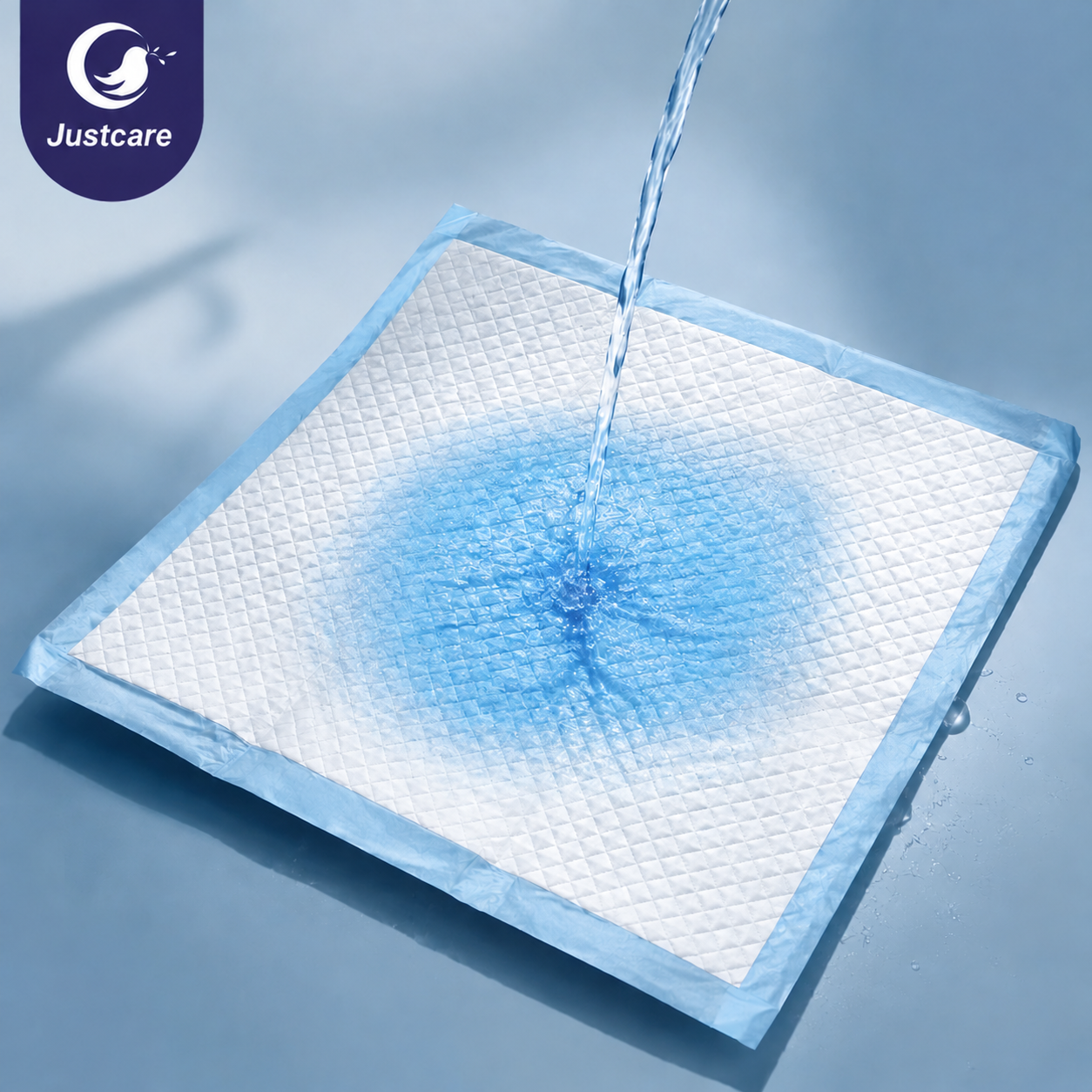
Surface protection is not a universal application. Different furniture types demand specific physical dimensions, material compositions, and usage requirements. Applying a small, smooth-backed pad to a large, active sleeper results in shifted bedding and exposed mattresses. Conversely, placing an oversized pad on a wheelchair causes bunching and friction injuries. Categorizing disposable nursing underpads by their intended surface ensures maximum efficacy and patient safety.
Overnight bed protection requires maximum absorbency and a large surface area. Standard bed pads measure 30" x 36" or larger. This sizing accommodates natural rolling and shifting during sleep. The pad must cover the primary strike zone, spanning from the patient's mid-back to the mid-thigh. Heavy-duty pads, often called chux, serve a dual purpose in bed care. Caregivers use them for patient repositioning. These specific pads feature reinforced backings with high tensile strength. They resist tearing when caregivers pull the edges to turn or boost a patient in bed. Standard lightweight pads will shred under this mechanical stress. When selecting bed pads, consider the following standard sizes:
17" x 24": Ideal for pediatric use, IV line starts, or minor wound care procedures.
23" x 36": Standard size for moderate adult incontinence, providing adequate coverage for stationary sleepers.
30" x 36": The clinical standard for hospital beds, offering a wide strike zone for patients who shift during sleep.
36" x 72": Bariatric or heavy-duty sizing, often equipped with tuckable wings to secure the pad under the mattress.
Protecting high-value upholstery presents unique challenges. Couches and recliners are difficult to clean and highly susceptible to permanent odor retention. Heavy leaks require pads with rapid absorption rates to prevent fluid from rolling off the edge of the cushion. Friction and adhesion play a major role here. Porous fabrics, like microfiber or cotton blends, naturally grip the plastic backing of a standard pad. However, smooth leather or vinyl recliners offer zero friction. Pads placed on leather will slide immediately when the user sits. For these surfaces, pads with textured backings or integrated adhesive strips are mandatory to maintain position.
Wheelchair protection requires strict sizing constraints. Standard wheelchair seats measure 16 to 20 inches wide. Placing a 30-inch pad on an 18-inch seat causes severe overhang and bunching. Bunched material creates pressure points against the user's skin, accelerating the development of ischemic ulcers. Pads designed for chairs usually measure 17" x 24". Adhesion is also critical for mobility aids. The constant vibration of a moving wheelchair, combined with patient transfers, easily dislodges loose pads. High-friction backings or peel-and-stick adhesive strips secure the pad directly to the seat cushion, preventing dangerous slipping during transitions.
Transit care prioritizes discreetness, portability, and rapid absorption under seated pressure. Car seats trap heat and apply concentrated pressure to the pad. When a user voids while seated, the fluid is forced outward rapidly. The pad must absorb the liquid instantly to prevent it from escaping over the edges. Portability is equally important. Caregivers need pads that fold compactly into travel bags without compromising the integrity of the SAP core. For public use, discreet pads with quiet, cloth-like backings prevent the crinkling noise associated with traditional plastic-backed variants, preserving user dignity.
Choosing between washable and disposable surface protection involves evaluating financial, operational, and clinical dimensions. Each modality offers distinct advantages depending on the care environment. Facilities and home caregivers must weigh the upfront costs against ongoing labor and infection control requirements.
Financial impact extends beyond the initial purchase price. Disposable pads require continuous purchasing. The unit cost is low, but the cumulative expense grows over time. Washable pads demand a higher upfront investment. However, washables incur ongoing utility costs, detergent expenses, and wear-and-tear on laundry machines. Scalability alters this dynamic. Institutional settings with industrial laundry facilities can process washables efficiently. Individual home caregivers often lack this infrastructure. For home care, the continuous purchase of disposables frequently offsets the high utility bills and machine degradation associated with daily heavy-duty laundering.
Clinical hygiene heavily favors single-use products. Handling soiled reusable pads introduces significant cross-contamination risks. Caregivers must transport wet, contaminated textiles through hallways or homes, increasing the spread of pathogens. Laundering requires precise water temperatures and chemical disinfectants to eradicate bacteria fully. Failure to achieve these parameters leaves residual bacteria in the fabric. Single-use pads eliminate this cycle. Caregivers roll the soiled pad inward, trapping the waste, and discard it immediately. This strict containment prevents healthcare-associated infections (HAIs) and maintains a sterile environment.
Labor represents the most significant hidden factor in incontinence management. Reusable textiles demand extensive processing time. A standard commercial laundry cycle for heavily soiled incontinence textiles requires a 15-minute pre-wash, a 30-minute hot water wash at 160°F for thermal disinfection, and a 45-minute high-heat drying cycle. Factoring in the manual labor of sorting, loading, unloading, and folding, a single batch consumes over two hours of operational time. Single-use pads reduce this labor to seconds. Eliminating the laundry process frees caregivers to focus on direct patient interaction, mobility assistance, and medical administration. In high-stress care environments, reducing physical labor directly correlates with lower caregiver burnout and improved overall care quality.
Comparison of Surface Protection Modalities | ||
Feature | Disposable Pads | Washable Pads |
|---|---|---|
Initial Cost | Low (per unit) | High (per unit) |
Ongoing Expenses | Continuous purchasing | Water, electricity, detergent |
Infection Control | High (single-use containment) | Variable (depends on wash protocols) |
Labor Required | Minimal (deploy and discard) | High (wash, dry, fold) |
Storage Space | High (requires bulk storage) | Low (compact folded storage) |
Selecting the right product requires evaluating technical specifications rather than relying on marketing claims. A pad that works perfectly for a wheelchair may fail completely during overnight bed use. Shortlisting products involves matching the pad's engineering to the specific clinical requirement.
Manufacturers categorize absorbency using terms like light, moderate, heavy, and maximum. These terms lack universal standardization. Evaluating actual fluid volume in milliliters (ml) provides an accurate metric. Light pads typically hold 100ml to 300ml, suitable for minor leaks or wound care. Moderate pads manage 400ml to 800ml. Heavy or overnight pads utilize dense SAP cores capable of retaining 1000ml to 2500ml or more. When selecting a waterproof incontinence bed pad for overnight use, always prioritize ml capacity over generic naming conventions.
Proper sizing prevents surface damage. Measure the target surface and the patient's typical movement zone. Select a pad that offers an adequate margin of error. For a standard hospital bed, a 30" x 36" pad provides sufficient lateral coverage. If the patient rolls frequently, a 36" x 36" or 36" x 72" pad with tuckable wings ensures the edges remain secured under the mattress. Undersized pads require perfect patient positioning, which is unrealistic during sleep.
The backing material dictates stability. Smooth plastic backings slide easily against fabric bedding. This sliding causes the pad to migrate away from the strike zone. Active users require textured backings that grip the underlying sheet. For hard surfaces like vinyl chairs or leather sofas, textured backings are insufficient. In these scenarios, select pads with integrated adhesive strips on the corners. These strips lock the pad in place, preventing dangerous shifts during patient transfers.
Urine rapidly breaks down into ammonia, creating strong, lingering odors. Standard fluff pulp absorbs liquid but does nothing to neutralize smell. Advanced pads incorporate specific polymer blends designed to trap ammonia molecules chemically. Some models also feature antimicrobial agents embedded in the top sheet. These agents inhibit the growth of odor-causing bacteria. Effective odor control improves the dignity of the patient and maintains a pleasant environment for cohabitants and caregivers.
Bulk purchasing becomes more efficient when pads serve multiple purposes. Beyond furniture protection, high-quality pads offer secondary clinical utilities. Caregivers place them under bedside commodes to catch splashes. They serve as clean, absorbent barriers during wound care or catheter insertions. In pediatric care, they function as portable changing mats. Evaluating these alternative uses adds significant value to institutional or home care inventory management.
Improper usage of absorbent products introduces practical challenges and clinical risks. Even the highest quality elder care hygiene supplies can cause harm if implemented incorrectly. Understanding these risks allows caregivers to adopt safe mitigation strategies.
Trapped moisture and heat destroy skin integrity. Moisture alters the skin's pH and weakens the stratum corneum. When caregivers stack multiple pads hoping to increase absorbency, they inadvertently multiply the plastic barrier layers. This completely eliminates breathability. The trapped heat raises the local skin temperature, causing severe sweating. This microclimate degradation leads to skin maceration. Soft, macerated skin tears easily under the shear forces of normal bed movement, rapidly forming pressure ulcers. Clinical guidelines mandate strict microclimate control. Mitigation requires strict adherence to single-pad usage. If leaks occur, upgrade to a higher-capacity pad rather than stacking multiple low-capacity units.
Restless users inadvertently move pads during sleep or seating. A shifted pad leaves the mattress exposed to fluid damage. More critically, a bunched pad creates hard ridges of compressed fluff and plastic. When a patient lies on these ridges, the localized pressure restricts blood flow to the tissue. This shear force accelerates tissue damage. Mitigation involves utilizing pads with tuckable wings for beds. For chairs, appropriately sized pads with adhesive strips prevent migration and keep the surface flat and safe.
Single-use products generate a high volume of non-biodegradable waste. The plastic backings and synthetic polymers take centuries to decompose in landfills. In clinical settings, soiled pads may require handling as biohazardous waste, increasing disposal costs. Mitigation involves strict inventory management to avoid unnecessary usage. Facilities should evaluate eco-friendly alternatives where available. Some manufacturers now offer pads with partially biodegradable backings or sustainably sourced fluff pulp. Proper disposal techniques, including tightly rolling the pad to minimize volume, help manage the physical waste footprint efficiently.
Conduct a small-scale trial of two to three different absorbency levels to determine the exact volume requirements for your specific care environment.
Test different backing types, including smooth, textured, and adhesive options, on your specific furniture to evaluate slip resistance and surface compatibility.
Establish a strict single-pad usage protocol among all care staff to prevent heat trapping, skin maceration, and unnecessary product waste.
Implement a rapid-change routine to ensure soiled pads are removed immediately upon detection, protecting patient skin integrity.
A: Yes. The top sheet consists of hypoallergenic, non-woven fabric designed for direct skin contact. It rapidly wicks moisture away, keeping the skin dry. Ensure the pad is highly breathable and do not stack multiple pads, as this traps heat and increases the risk of skin maceration.
A: Heavy-duty and overnight pads typically hold between 1000ml and 2500ml of liquid. The exact capacity depends on the concentration of superabsorbent polymers (SAP) in the core. Always check the manufacturer's milliliter rating rather than relying on generic terms like maximum absorbency.
A: No. Stacking pads is highly counterproductive. It creates multiple impermeable plastic barriers that trap body heat and cause severe sweating. This leads to skin breakdown and pressure ulcers. If a single pad leaks, switch to a single, higher-capacity pad instead of stacking.
A: Standard smooth-backed pads will slide on leather or vinyl. To prevent this, use pads equipped with peel-and-stick adhesive strips on the corners. Alternatively, select pads with specialized high-friction, textured backings designed specifically for smooth upholstery.
A: Only specific heavy-duty pads, often called chux, are safe for repositioning. These feature reinforced backings with high tensile strength designed to bear weight. Standard lightweight pads will tear under the mechanical stress of lifting or turning a patient, risking injury.
A: Change the pad immediately upon detecting soiling. Leaving a wet pad under a patient exposes their skin to moisture and ammonia, rapidly causing irritation and tissue breakdown. Immediate changing maintains skin integrity, neutralizes odors, and ensures a hygienic environment.
A: Generally, no. Standard pads contain superabsorbent polymers and plastic backings that are non-recyclable and non-compostable in municipal systems. They must be disposed of in standard trash. In clinical settings, heavily soiled pads may require disposal according to specific biohazard waste protocols.