


+86-13971665988 | info@justcaredisposable.com


Views: 0 Author: Site Editor Publish Time: 2026-08-29 Origin: Site


The post-2020 shift in hospitality standards has cemented in-room and spa footwear as a baseline expectation for hygiene, guest comfort, and property cleanliness. Procurement directors, boutique hosts, and property managers face a strict operational challenge. They must balance unit economics, mitigate slip-and-fall liabilities in wet areas, and navigate the increasing scrutiny over single-use plastics. This guide provides a technical evaluation framework for sourcing disposable hospitality supplies. We help decision-makers align slipper materials, sole constructions, and sustainability profiles with their property’s operational realities and brand standards. You will learn how to specify the exact fabric weights, tread depths, and packaging logistics required to elevate the guest experience while protecting your operating margins.
Safety Dictates Specification: Wet environments (spas, pool areas) require specific sole constructions, notably closed toe EVA hotel slippers with deep-tread slip resistance, to mitigate liability.
Material Impacts Perception: The choice between non-woven fabric, terry cloth, and velour directly correlates with guest perception of property tier (economy vs. luxury).
The Sustainability Shift: With single-use hotel amenities facing regulatory and public relations pressures, properties must weigh the cost of traditional plastics against emerging biodegradable or commercial-wash alternatives.
Establish exactly what constitutes a successful slipper program before contacting vendors. True success means achieving specific, measurable operational goals across the property. You cannot manage what you do not measure, so define your baseline metrics early.
Zero cross-contamination incidents originating from locker rooms or pool decks.
Zero slip-and-fall claims on wet spa floors or freshly mopped marble lobbies.
Consistent positive mentions in guest reviews specifically highlighting the quality of room amenities.
Measurable reduction in housekeeping floor-cleaning times due to reduced outdoor dirt tracking.
Single-use footwear plays a critical role in preventing the transmission of fungal infections in high-traffic wellness centers. Bare feet in communal wet areas present a massive hygiene risk. Conditions like tinea pedis and plantar warts thrive in warm, damp environments. Providing immediate foot protection mitigates this danger entirely. When guests walk from the sauna to the showers, a physical barrier between their skin and the tile is non-negotiable. You protect the guest, and you protect the property from health department citations.
Short-term rentals and boutique hotels benefit operationally by enforcing strict shoe-free policies. Street shoes track abrasive dirt, mud, and pathogens onto expensive hardwood floors and plush carpets. Supplying high-quality indoor footwear encourages guests to leave their outdoor shoes at the door. This simple operational pivot protects delicate flooring materials. It also drastically reduces housekeeping turnaround times between stays, as staff spend less time extracting mud from carpets or buffing scratches out of hardwood.
Visibly new, tamper-sealed footwear provides immense psychological comfort to arriving guests. After a long day of travel, stepping into a pristine pair of slippers signals that the room is sanitized and prepared exclusively for them. Slipper presentation heavily influences the perceived value of the accommodation. A flimsy, transparent plastic bag tossed on the closet floor signals a budget operation. Conversely, thick slippers neatly arranged on a bedside mat or presented in a branded fabric pouch immediately elevate the room's status.
Frequent travelers and minimalists often pack high-quality hotel slippers for future long-haul flights or subsequent hotel stays. This well-documented souvenir effect transforms a seemingly disposable item into a prolonged brand touchpoint. Every time the guest wears the slippers on an airplane, they interact with your brand logo. Branded amenities drive direct bookings and foster long-term brand loyalty. Investing slightly more in the tactile quality of the footwear yields a measurable return on investment through repeat visits.
Selecting the correct materials requires matching the physical properties of the footwear to the specific environment of the hotel. Procurement teams must analyze fabric density, toe configuration, and sole mechanics. Do not guess on these specifications; demand exact numbers from your suppliers.
Non-woven fabric serves as the baseline standard for budget-tier properties, short-stay medical clinics, and high-turnover vacation rentals. This material offers exceptional breathability and represents the absolute lowest cost per unit. However, non-woven fabric delivers the lowest durability and the lowest perceived value. It tears easily under heavy use and provides minimal thermal insulation. Budget non-woven slippers often sit around 40 to 50 GSM (Grams per Square Meter), feeling somewhat like thick paper. They work perfectly for a one-night stay but fail rapidly if a guest wears them for a week.
Terry cloth and waffle weave materials fit perfectly within mid-tier to premium hotel environments. These fabrics provide high absorbency, making them the ideal choice for guests stepping out of the shower or returning from the spa. Terry cloth carries a moderate cost while maintaining a strong cultural association with traditional hospitality comfort. Mid-tier terry cloth ranges from 120 to 180 GSM, providing adequate moisture absorption. Waffle weave offers a slightly more modern aesthetic while retaining excellent moisture-wicking properties.
Velour and coral fleece target ultra-luxury resorts, VIP suites, and high-end winter lodges. These materials push past 250 GSM. This density creates the plush, cloud-like feel guests expect in five-star suites. Guests immediately recognize the superior quality upon touch. However, their higher thermal retention means they trap heat efficiently. Therefore, velour and fleece may cause discomfort in tropical climates or non-air-conditioned summer retreats.
Material Type | Average GSM | Water Absorbency | Best Property Use Case | Durability Rating |
|---|---|---|---|---|
Non-Woven Fabric | 40 - 60 | Low | Budget Motels, Clinics | Low (1-2 days) |
Terry Cloth | 120 - 180 | High | Mid-Tier Hotels, Spas | Medium (3-5 days) |
Waffle Weave | 150 - 200 | High | Boutique Hotels, Resorts | Medium (3-5 days) |
Velour / Coral Fleece | 250+ | Medium | Luxury Suites, Winter Lodges | High (7+ days) |
Open-toe designs work best for specific operational use cases. They dominate pedicure stations, warm-weather resorts, and environments demanding maximum foot breathability. Open-toe models offer significant sizing flexibility. Because the toes are not restricted, a single size can comfortably accommodate a much wider range of foot lengths and widths. This reduces the need to stock multiple sizes in the housekeeping storage rooms.
Closed toe configurations suit colder climates, corporate business hotels, and properties aiming for a premium, tailored aesthetic. Luxury properties often mandate closed toe EVA hotel slippers to provide maximum warmth and perceived durability. The closed design delivers a more substantial, shoe-like feel that guests associate with high-end residential comfort. It also hides the toes, which many guests prefer when walking through communal hallways, riding elevators to the spa, or ordering room service.
The sole construction dictates the safety profile of the entire product. EVA (Ethylene-Vinyl Acetate) serves as the industry standard for sole material due to its lightweight and flexible nature. EVA thickness typically ranges from a paper-thin 3mm up to a robust 8mm or more. A 3mm sole suffices for carpeted bedrooms but fails to protect the foot from cold tile floors. A 6mm to 8mm sole provides necessary cushioning and thermal separation from cold surfaces.
Foam density matters just as much as thickness. High-density EVA resists compression over time. Low-density EVA feels softer initially but flattens out within hours of use. For a guest staying three nights, a low-density sole becomes paper-thin by checkout. Specify high-density EVA for multi-night stays. You can test this by pressing your thumb firmly into the sole; high-density foam will rebound immediately, while low-density foam will leave a temporary indentation.
Spa and wellness center environments absolutely demand textured or dotted soles. Smooth EVA acts like a ski on wet tile. Deep tread patterns are necessary to prevent hydroplaning on wet marble, pool decks, or locker room floors. The texture channels water away from the contact point, providing mechanical grip. A simple cross-hatch pattern provides minimal grip, whereas deep, multi-directional lugs channel water effectively.
Examine the internal construction carefully. Avoid cheap cardboard inserts at all costs. Cardboard disintegrates rapidly when exposed to wet bathroom floors or damp spa environments, leaving a lumpy, ruined mess. Water-resistant sponge padding costs marginally more but provides a much safer, more durable, and vastly more comfortable implementation.
To verify safety, conduct a physical wet-floor slip test before signing any vendor contracts. Follow these exact steps:
Obtain a sample of the exact tile or marble used in your property's bathrooms or pool areas.
Apply a thin layer of water mixed with standard hotel body wash to simulate shower runoff.
Place the sample slipper on the wet tile and apply 50 pounds of downward pressure.
Attempt to push the slipper forward. If it glides with zero resistance, reject the sole design immediately.
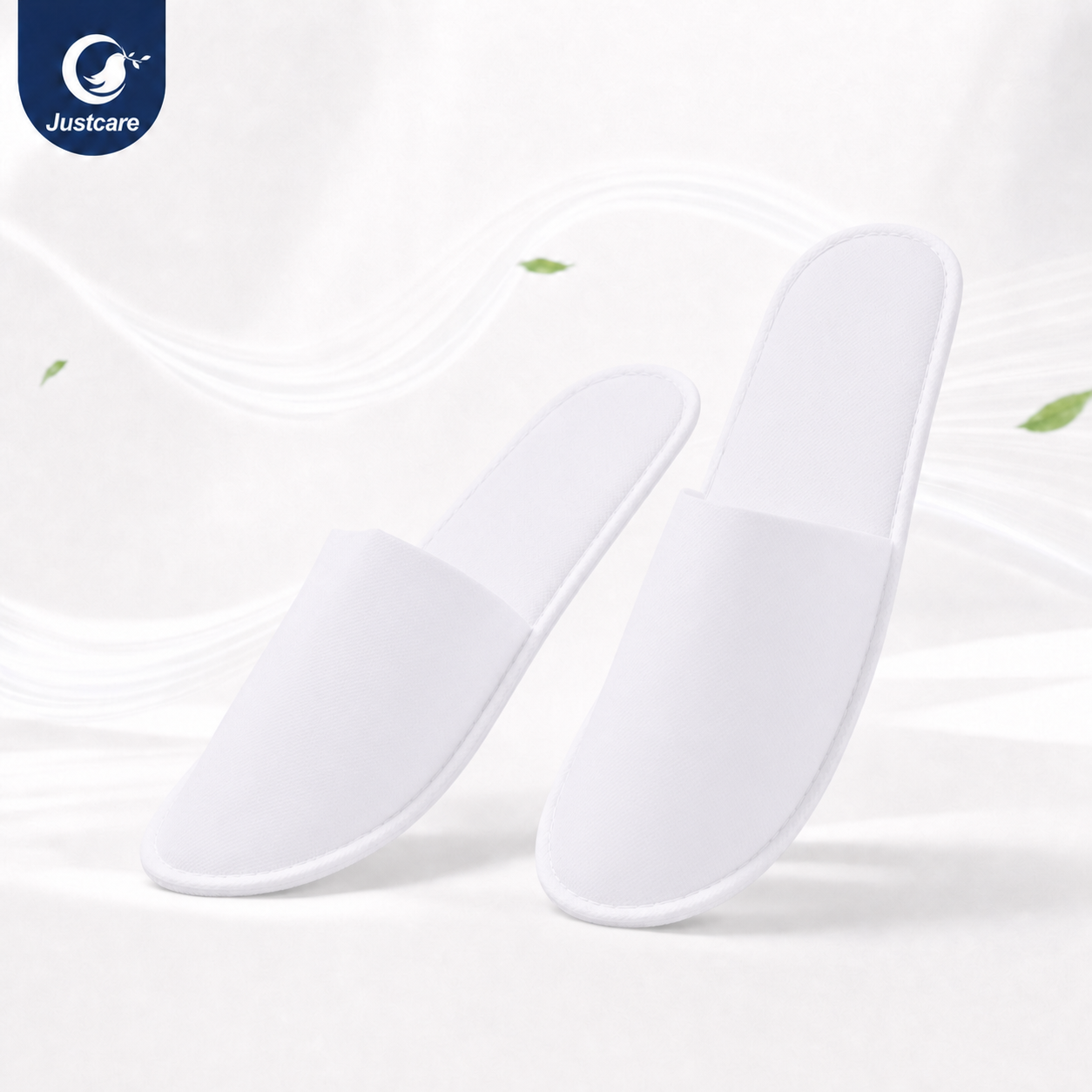
The hospitality industry faces immense pressure to reduce its environmental footprint. Single-use amenities sit at the center of this debate, forcing properties to rethink their procurement strategies. You cannot ignore this shift; guests actively look for sustainable practices.
A growing industry narrative directly compares disposable hotel slippers to plastic straws and single-use water bottles. Environmental advocacy groups and eco-conscious travelers actively criticize properties that generate excessive landfill waste. Luxury eco-resorts risk severe brand damage by utilizing standard plastic-wrapped, synthetic slippers. When a property markets itself as a sanctuary of nature but provides guests with unrecyclable petroleum-based footwear wrapped in cellophane, the hypocrisy alienates the target demographic. Local municipalities in tourist-heavy regions are also beginning to draft legislation limiting single-use plastics in hotels, meaning proactive procurement is now a compliance necessity.
Natural materials like linen, bamboo, cotton, and palm leaf offer highly viable alternatives to synthetic fabrics. Bamboo provides natural antibacterial properties and excellent breathability. Linen offers a crisp, premium aesthetic. Procurement teams must carefully assess the cost multiplier of these materials, which can be significantly higher than basic non-woven models. Supply chain availability for natural fibers also fluctuates more than synthetic production, requiring longer lead times for bulk orders.
Biodegradable soles present another critical option for eco-conscious properties. Compostable soles made of PLA (Polylactic Acid) or natural rubber contrast sharply with traditional EVA, which takes centuries to decompose. However, properties must understand the operational caveats. PLA requires commercial composting facilities reaching specific temperatures to break down effectively. If these soles end up in a standard landfill, they do not biodegrade as advertised. You must verify that your local waste management provider can actually process PLA materials before making the switch.
Transitioning to commercial-grade washable slippers involves a complex operational trade-off. Reusable footwear eliminates daily landfill waste but introduces heavy laundry costs, increased water usage, and chemical detergent runoff. Furthermore, properties face hygiene perception risks; guests may reject washable slippers if they suspect inadequate sanitization. Finally, high-quality washable slippers suffer from high replacement rates due to guest theft and rapid physical wear from industrial washing machines.
Effective procurement extends far beyond negotiating the lowest unit price. It requires a strict evaluation of the vendor's capabilities, quality control processes, and supply chain resilience. A cheap unit price means nothing if the shipment arrives three months late or fails safety inspections.
Logo application significantly impacts guest perception and brand recall. Embroidery offers the highest perceived value, creating a textured, premium look. However, embroidery carries a higher unit cost and requires a longer manufacturing lead time. The backing of the embroidery must also be covered by a soft inner lining so it does not scratch the top of the guest's foot. Screen printing provides a highly cost-effective alternative for complex logos. Yet, printed logos are prone to fading, cracking, or peeling if applied poorly to textured fabrics like terry cloth.
Individual packing requires a delicate balance. Properties must satisfy the guest's psychological need for tamper-evident, sanitary packaging while meeting corporate plastic reduction goals. Forward-thinking properties are shifting away from single-use OPP (Oriented Polypropylene) plastic bags. They now utilize non-woven drawstring bags, unbleached cotton pouches, or simple recycled paper bands to secure the footwear. These alternatives maintain hygiene standards while drastically reducing plastic waste.
Calculate optimal order volume based on historical occupancy rates and seasonal demand spikes. Minimum Order Quantities (MOQs) often dictate pricing tiers. Ordering massive bulk quantities secures a lower price but ties up operating capital. You must also factor in the logistics of ocean freight versus air freight. Slippers have a high volumetric weight. Shipping 50,000 pairs of plush velour slippers requires significantly more container space than shipping 50,000 pairs of thin non-woven slippers. Always calculate your landed cost, including freight and customs duties, before finalizing the budget.
Address the physical reality of storing bulk inventory. Ten thousand pairs of closed-toe slippers require significant warehouse space. Plan warehouse space accordingly. This space must remain dry and climate-controlled. High humidity causes rapid mold growth in natural materials like cotton and bamboo. Extreme heat accelerates the degradation of synthetic EVA soles and sponge inserts.
Audit wholesale suppliers rigorously. Do not rely solely on digital catalogs. Request documentation proving consistent sizing standards and stitching integrity. When auditing factories, look for ISO 9001 certification for quality management. Check for OEKO-TEX Standard 100 certification if using natural fabrics. This guarantees the textiles contain no harmful chemicals, which is vital for items worn directly against bare skin.
Quality Assurance Check | Inspection Method | Failure Indicator |
|---|---|---|
Sole Adhesion | Manual pull test on the toe and heel joints. | Glue separation under moderate force. |
Stitching Integrity | Visual inspection of the binding edge. | Frayed threads, skipped stitches, uneven lines. |
Foam Density | Thumb compression test on the heel. | Foam fails to rebound immediately. |
Sizing Consistency | Measure 10 random pairs from a bulk carton. | Length variance exceeding 0.5 centimeters. |
The final step in a successful footwear program involves flawless execution by the housekeeping and operations teams. Procurement efforts fail if the presentation falls flat. You must train your staff on exactly how to handle and present these items.
Standardize housekeeping Standard Operating Procedures (SOPs) based on the specific property type. Luxury hotels should instruct staff to place slippers on a crisp bedside mat during the evening turndown service, accompanied by a robe. Vacation rentals enforcing a strict no-outdoor-shoes policy must display the footwear prominently in an entryway basket or on a dedicated shoe rack near the front door. This visual cue prompts immediate compliance from arriving guests.
Manage inventory carefully across various sizing options. Universal sizing (one-size-fits-most) vastly simplifies back-of-house operations. Housekeepers grab one standard pair without checking labels. However, stocking distinct male, female, and children's sizes provides a superior, tailored guest experience. This approach increases inventory complexity, requires more storage bins on housekeeping carts, and complicates reordering calculations. If you choose specific sizing, implement a color-coded binding system (e.g., black trim for large, white trim for medium) so housekeepers can identify sizes instantly without reading tiny tags.
Establish clear guidelines for end-of-life management. Housekeeping staff need explicit instructions on handling used footwear after guest checkout. If the property participates in specialized textile recycling programs, staff must separate the slippers into dedicated bins on their carts. If no recycling infrastructure exists, the items must enter the standard waste streams efficiently. Do not leave used slippers in the room for the next guest under any circumstances.
Request physical sample packs from at least three different wholesale vendors to compare tactile quality and foam density.
Conduct wet-floor slip tests on site using the exact tile or marble installed in your bathrooms and pool areas.
Audit the packaging materials physically to ensure they align with your property's sustainability mandates.
Verify the exact thickness of the EVA sole with digital calipers to ensure the vendor meets the agreed specifications.
A: Universal sizing typically measures 28 to 29 centimeters in length. This dimension accommodates most adult foot shapes comfortably without being overly loose. Properties should order extended sizes specifically for luxury suites, wellness centers, or resorts that cater to a diverse international demographic with varying average heights.
A: Smooth EVA soles pose a severe slipping hazard on wet tile. Safe spa environments absolutely require textured or corrugated EVA soles. Deep tread patterns channel water away from the foot, providing essential mechanical slip resistance and mitigating legal liability in wet areas like locker rooms and pool decks.
A: Recycling mixed-material slippers is extremely difficult. Standard municipal facilities cannot easily separate fabric uppers from synthetic EVA soles. Properties committed to recycling must source specific compostable models made entirely from natural fibers or partner with specialized commercial textile recycling programs capable of processing mixed synthetics.
A: Industry standards dictate placing slippers by the bedside during evening turndown service. Alternatively, housekeepers leave them in the closet alongside freshly laundered robes. Properties enforcing strict shoe-free rules must place them in a highly visible entryway basket to prompt immediate use upon guest arrival.
A: Prevent cross-contamination by utilizing individually sealed packaging for every single pair. Staff must enforce strict single-use policies, ensuring guests never reuse footwear left by previous visitors. Tamper-evident paper bands or sealed drawstring bags guarantee the item remains completely untouched until the current guest opens it.
A: Properties generally expect and actively encourage guests to take single-use footwear home. This practice eliminates any reuse liabilities and reduces immediate property waste volume. Furthermore, high-quality branded slippers serve as excellent extended marketing tools when guests wear them during future travel or inside their own homes.
