


+86-13971665988 | info@justcaredisposable.com


Views: 0 Author: Site Editor Publish Time: 2026-08-02 Origin: Site


Managing hospital linens presents a massive operational challenge for medical facilities everywhere. This complex logistical web also represents a critical vector for modern infection control. Healthcare leaders constantly search for safer, more efficient ways to handle patient bedding daily. The debate between single-use and washable linens is rarely a simple binary choice. Administrators face the difficult task of balancing daily operational efficiency, staff workloads, and clinical risk. Relying solely on one method often creates unexpected bottlenecks in fast-paced hospital wards. The stakes are incredibly high when patient health and resource management collide.
This guide provides healthcare facility managers and procurement teams an objective, evidence-based framework. We will carefully evaluate both disposable and reusable options to help you make informed decisions. You will learn how to streamline your operations and significantly improve clinical outcomes. The right strategy directly supports front-line workers and enhances overall patient care.
Total Cost of Ownership (TCO): Reusables require heavy upfront capital and unpredictable processing costs (water, labor, energy), while a disposable bed sheet offers fixed, predictable per-unit pricing.
Infection Control: Disposables eliminate cross-contamination risks associated with improper laundering, making them standard for isolation and high-turnover units.
Operational Workflow: Single-use linens reduce staff turnaround time during bed changes but require adequate dry storage and medical waste management.
Strategic Deployment: Most modern facilities adopt a hybrid model, reserving reusables for long-term patient comfort and disposables for critical care, ER, and outpatient settings.
Many hospitals underestimate the immense logistical burden of reusable textiles. Commercial laundering demands significant ongoing resources. Facilities must account for expensive chemical supplies and massive thermal energy. These industrial machines consume thousands of gallons of fresh water daily. Specialized labor demands remain consistently high across all shifts. Washable textiles also degrade steadily over time. Staff routinely discard stained, torn, or threadbare linens. This constant replacement cycle creates hidden operational friction. Administrators often struggle to forecast these fluctuating daily demands.
Transitioning to a single-use model shifts management strategies entirely. You move from complex variable logistics to predictable inventory lines. A high-quality Disposable Bed Sheet offers strict per-unit control. You know exactly what each bed change requires. Managers can easily forecast their monthly usage and order accordingly. Predictable inventory models eliminate surprise utility usage and labor overtime. This transition simplifies procurement and stabilizes department supply chains. Rural hospitals especially benefit from avoiding complex laundry transport contracts.
"Linen loss" heavily plagues the global healthcare industry. Busy medical staff frequently throw away washable textiles by accident. Paramedics often leave hospital sheets at various trauma scenes. Sometimes patients inadvertently take blankets or sheets home. This widespread shrinkage artificially inflates the operational burden of reusable items. You must constantly replenish lost stock to avoid ward shortages. Single-use items eliminate this specific anxiety completely. They are intended for disposal, rendering accidental loss irrelevant.
Track daily linen usage by specific clinical departments.
Maintain a strict two-week safety stock for critical supplies.
Audit disposal bins monthly to measure reusable textile shrinkage.
Establish clear vendor communication to prevent sudden stockouts.
Healthcare-associated infections (HAIs) pose severe, life-threatening risks. Standard laundering sometimes fails to eradicate resilient pathogens entirely. C. diff spores and MRSA can survive high-temperature industrial washes. This resilience endangers vulnerable patients in intensive care units. Cross-contamination occurs when facilities mix linens from different wards. Improperly sanitized textiles serve as direct transmission vectors. Eliminating these risks requires flawless, highly monitored laundry protocols.
High-quality single-use sheets feature advanced, modern engineering. Manufacturers design them using fluid-resistant or completely impermeable barriers. These synthetic layers protect the mattress core effectively. Trauma centers and burn units require this strict compliance standard. It stops bodily fluids from seeping into underlying surfaces. Mattress contamination often forces hospitals to discard expensive beds entirely. Using a reliable barrier prevents this catastrophic equipment loss. It also protects subsequent patients from hidden surface pathogens.
Infectious disease wards demand rigorous, uncompromising standards. Single-use linens serve as the absolute baseline requirement here. They actively mitigate handling risks for environmental services (EVS) staff. Workers simply roll up and discard the bedding safely. They avoid sorting soiled, highly contagious fabrics manually. Standardizing isolation protocols around disposable items protects hospital employees. It ensures uniform compliance across every isolation room. Consistent protocols reduce the likelihood of accidental staff exposure.
Reusing visibly soiled blankets on the same patient to save time.
Storing clean linens too close to dirty laundry hampers.
Failing to train EVS staff on proper removal and bagging techniques.
Ignoring mattress core inspections between patient discharges.
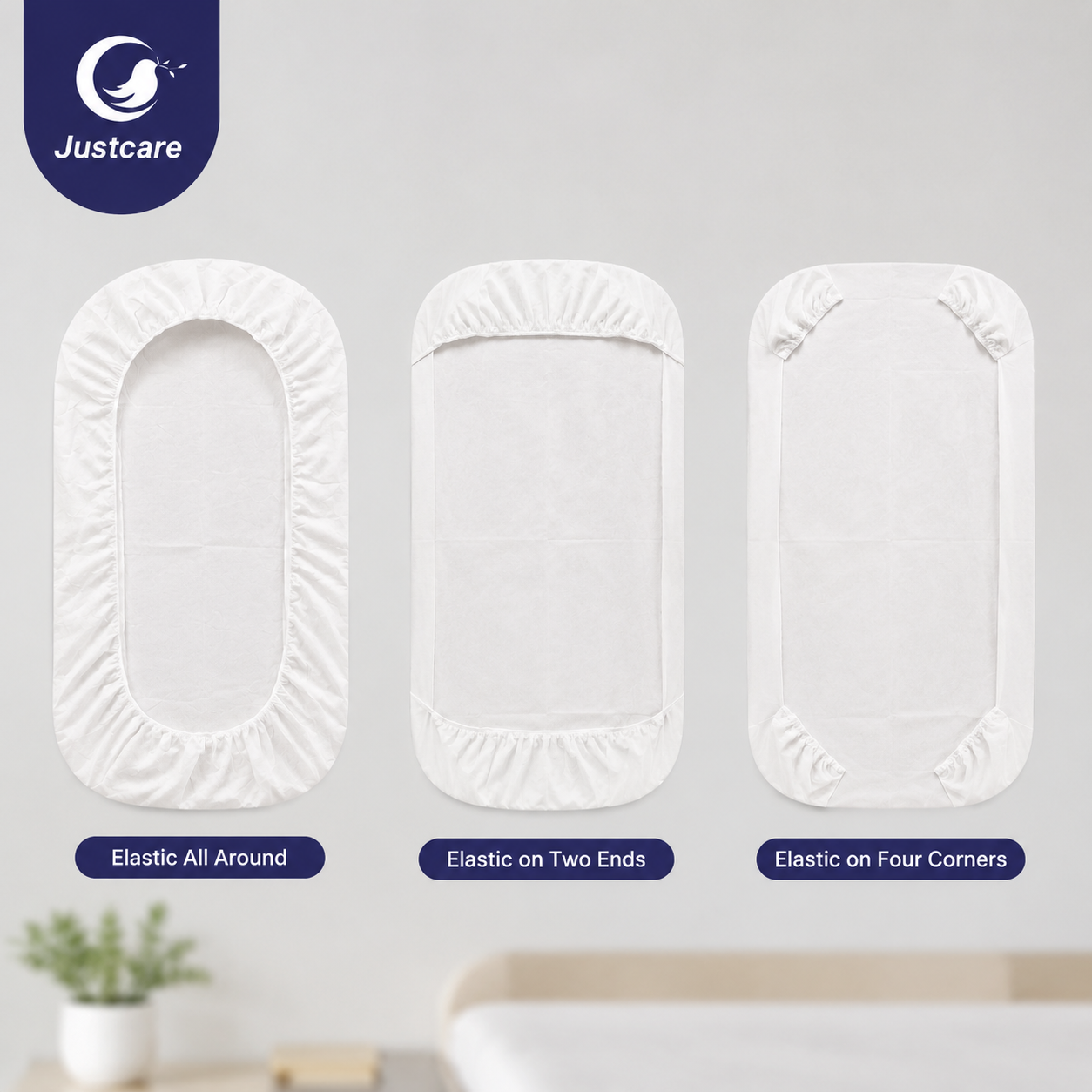
Bed turnaround times (TAT) directly impact hospital revenue and patient satisfaction. Emergency departments require immediate bed availability constantly. EVS and nursing staff spend significant time processing soiled reusables. They must carefully strip, bag, and tag contaminated fabrics. This tedious process slows down room readiness. Rapid disposal of single-use sheets accelerates this workflow dramatically. Staff merely remove the sheet and place it in the appropriate bin. Faster bed changes reduce patient wait times significantly in busy triage centers.
Reusables demand complex, space-consuming logistical streams. Facilities need separate carts for clean and dirty items. They require dedicated soiled linen rooms on every floor. Commercial laundry transport adds another layer of daily complexity. Disposables require an entirely different supply chain approach. They demand increased on-site dry storage capacity. Reliable vendor inventory management prevents dangerous stockouts. You must ensure your supply closets can handle bulk cartons efficiently.
Patient comfort heavily influences overall satisfaction scores. Traditionally, long-term care facilities preferred woven cotton reusables. Cotton offers breathability and helps prevent pressure ulcers. However, material science has advanced rapidly over the past decade. Modern disposable options utilize non-woven, highly breathable synthetic polymers. These advanced materials maintain skin integrity effectively. They offer a surprisingly soft tactile experience for patients. Many short-stay patients cannot tell the difference between both options.
Workflow Metric | Reusable Linens | Disposable Linens |
|---|---|---|
Post-Use Handling | Sort, bag, tag, and transport to laundry | Direct disposal into designated waste bins |
Facility Space Required | Soiled holding rooms and laundry carts | Expanded clean dry storage rooms |
Staff Time Per Bed | Higher (requires careful, structured handling) | Lower (allows quick removal and replacement) |
Risk of Stockouts | Dependent on laundry return speeds | Dependent on vendor delivery schedules |
Cross-Contamination Risk | Moderate (depends on handling protocols) | Minimal (single-use nature eliminates reuse) |
Environmental impact claims exist strongly on both sides of this debate. Disposables undeniably increase the total volume of facility solid waste. Facilities must pay by weight for medical waste removal. Over-reliance on single-use items strains local landfill capacities. However, reusables deplete entirely different natural resources. Industrial laundering consumes massive amounts of fresh water daily. It also generates significant chemical effluent. This polluted wastewater requires extensive municipal treatment before release.
Hospitals now prioritize strict ESG (Environmental, Social, and Governance) reporting. Facilities can align their linen choices with institutional sustainability goals. Leading oncology and surgical centers utilize robust reporting frameworks. They measure both water conservation and waste reduction simultaneously. Administrators must balance these conflicting environmental priorities carefully. Reducing water usage often increases solid waste output. You must decide which metric matters most to your community and regulatory environment.
The disposable sector continues to introduce exciting material innovations. Manufacturers increasingly shift toward recyclable or biodegradable non-woven polymers. These advancements help offset traditional landfill impacts. Facilities can source sheets made from bio-based plastics. While widespread recycling of medical textiles remains difficult, uncontaminated sheets offer potential. As recycling infrastructure improves, single-use items will become greener. Procurement teams should constantly monitor vendor updates for sustainable options.
Neither extreme offers a perfect solution for large hospitals. Most modern facilities adopt a strategic hybrid model. You must evaluate the specific needs of each department independently. Applying a blanket policy across an entire hospital rarely yields optimal results.
Emergency departments, outpatient surgery centers, and isolation rooms experience high turnover. Ambulances and incontinence care units also face intense daily demands. These high-risk zones benefit immensely from disposable options. They require maximum infection control and rapid room turnover. The barrier protection prevents dangerous fluid leaks during chaotic emergencies. We strongly recommend single-use solutions for these fast-paced environments. They ensure peak safety when staff cannot carefully sort laundry.
General med-surg wards and long-term inpatient rehabilitation centers operate differently. Maternity wards prioritize ultimate comfort and a home-like feel. These low-acuity zones favor traditional reusable textiles. Patients stay longer and appreciate the familiar feel of cotton. The risk of sudden, massive fluid contamination remains lower here. Reusables make perfect sense for multi-day patient stays where comfort leads the priority list.
You can seamlessly implement a hybrid strategy using this three-step shortlisting guide:
Conduct a 30-day departmental audit: Measure your current linen loss rates. Review your monthly laundry processing invoices. Identify exactly which wards experience the highest turnover and contamination rates.
Request non-woven material samples: Ask your suppliers for physical samples. Evaluate the tear strength of each product. Test the tactile comfort against bare skin to ensure patient satisfaction remains high.
Run a small-scale pilot: Choose a single high-turnover unit, such as the ER. Measure the exact time EVS staff save during bed changes. Gather direct feedback from nursing staff regarding ease of use and durability.
Hospital linen management requires careful, strategic planning at every level. Neither the single-use nor the reusable option is universally superior. The correct choice depends heavily on your specific clinical environment. Your local laundry infrastructure and storage capacity also dictate which method works best. A successful strategy balances safety, workflow speed, and patient comfort.
Adopting a hybrid approach maximizes both safety and daily efficiency. Facilities can deploy traditional cotton for long-term patient comfort. They can simultaneously utilize synthetic barriers for high-risk isolation wards. This balanced method optimizes your daily operational workflow effortlessly. It protects vulnerable patients while supporting your busy medical staff.
We encourage procurement teams to take immediate action. Request material samples from trusted vendors to begin your evaluation. Start auditing your current processes to uncover hidden inefficiencies today. Small, strategic changes in your bedding strategy yield massive facility-wide improvements. Protect your patients and empower your staff by making informed linen choices.
A: Yes, if specified correctly. Procurement must look for "draw sheets" or base sheets reinforced with heavy-duty polymers specifically rated for patient lifting, rather than standard lightweight exam table paper. Specialized transport sheets undergo rigorous tensile strength testing to ensure safe lateral patient transfers.
A: While a single disposable sheet often costs less than the combined cost of acquiring, washing, drying, and transporting a reusable sheet once, the total financial impact depends on the facility's patient turnover rate and existing laundry contracts. Facilities must weigh these variables based on their specific departmental volume.
A: Generally, no, if they have been contaminated with bodily fluids (they must be treated as medical waste). However, uncontaminated single-use sheets made from specific synthetic non-wovens are technically recyclable, though few hospitals have the separation infrastructure to do so effectively. Advances in biodegradable polymers are improving future disposal options.
